User Research for Puzzles
What is a puzzle?
This is the question that started my independent study, drove a lot of my choices when creating these different ideas I wanted to test, and something that I am not sure I still have a universal answer to today.
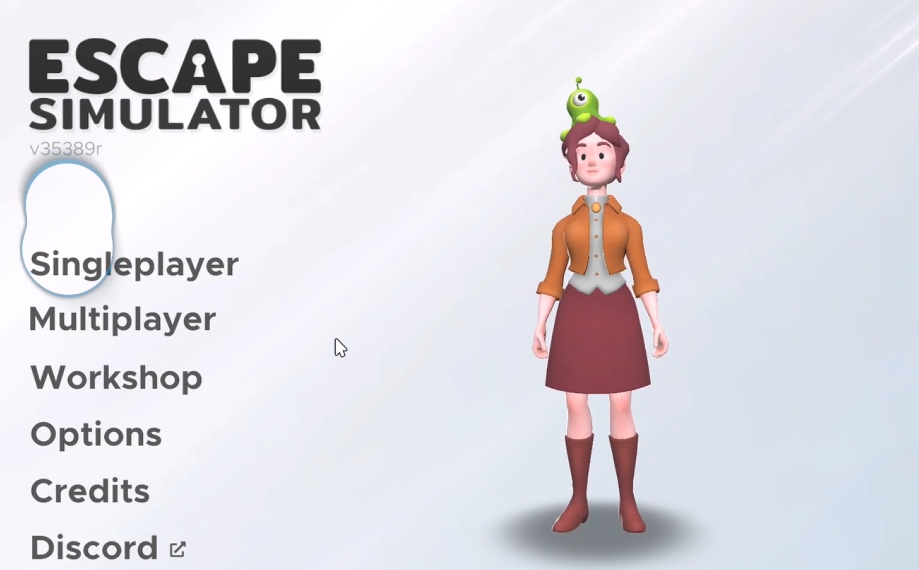
The game Escape Simulator fit all of the specifications that I wanted, and from there I took off running.
Next Steps
I had a concept and a game decided, so my next steps were planning and some research review done by others. I first started to look at published articles that went different studies that were completed, the ethics behind these studies, and what went well, or not well, for each.
From there, I wrote and submitted by own analysis on a handful of articles throughout the semester, and opened a conversation with my professor about these different studies, and other studies I had found and some of the interesting finds I could apply to my own projects.
I also started looking into escape rooms specifically, and how that experience works in terms of problem-solving and puzzles.
I found a lot of interesting articles reaching back to using escape rooms for fast, critical thinking in nursing students, as team building activities, and other ways that it was a methodology to build skills for other professions.
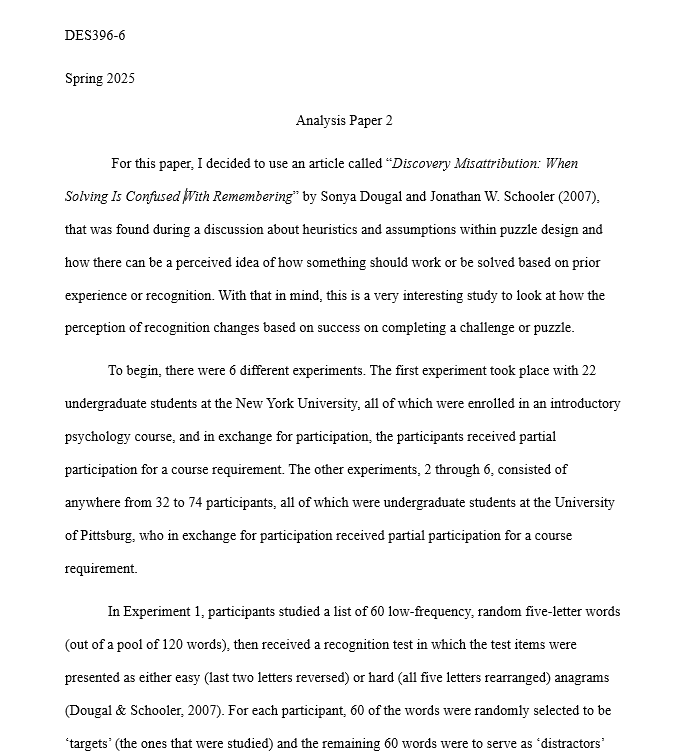
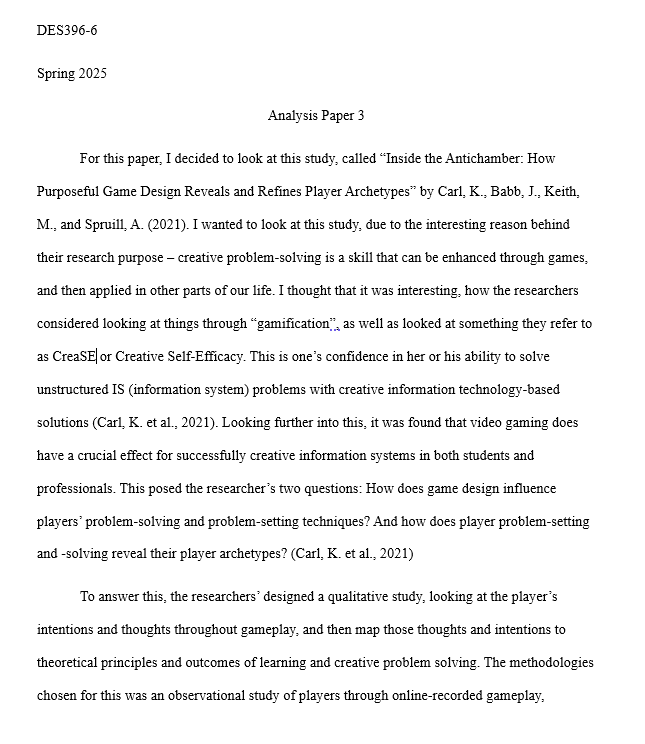
Some of the analysis papers written from this independent study.
Time for Testing Puzzles
My first start at setting up the experiment was to create my own puzzle room with different types of puzzles in order to see how they were solved within the same space.
Very quickly, I realized that wasn’t going to be a realistic goal within the time frame I was working with, since that would require puzzle creation, testing, and iteration before my study even began.
Thus, we pivot our approach.
What We Actually Did
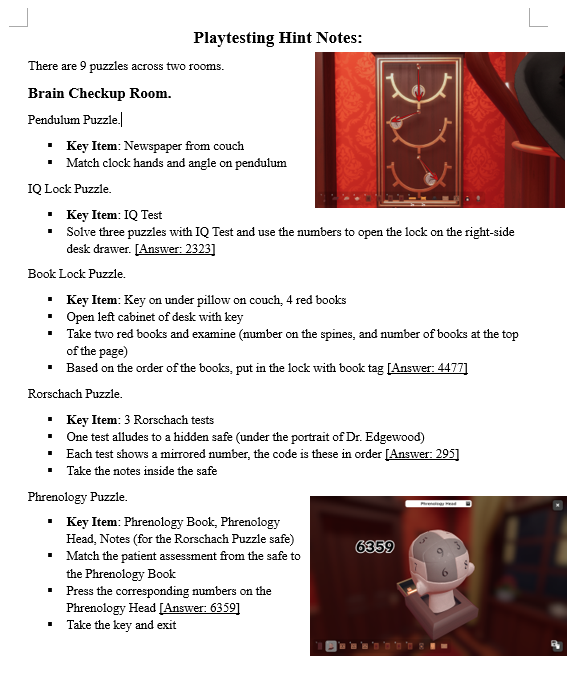
I started with creating and distributing a consent form to players, before conducting a playtest with notes and following the playtest with a survey. I tried to note when players lingered on a puzzle, repeated actions, or showed any specific change in emotion during gameplay. I also timed how long it took to complete each room, and all puzzles in total to compare the data with what puzzles and thoughts the players had.
It was a really interesting start, and was more familiar territory while I tried to figure out how I wanted to vary this for the second half of my study.
I decided to use the game Escape Simulator still, but instead played through a variety of their rooms and levels to find a combination of puzzles to use for the first half of this study.
I chose two rooms within their manor map, the Brain Checkup Room and the Library.
Across both rooms, the player would complete 9 different puzzles, consisting of a mixture of spatial, rebus, and logic based puzzles.
So where did I begin?
This study was an independent study I completed at DigiPen. I knew coming into the independent study I wanted to merge two things I am very fond of - puzzles and research.
From there, I narrowed down some specifics for the study:
I needed to decide what style of puzzles I wanted to look at
The puzzles should come from a video game-style of media
I wanted to find a game that I could create custom puzzles in